100-Hour Inspections
Standard 100-hour inspection labor, priced by aircraft make and model — no surprises at pickup.
A 100-hour inspection is a detailed, comprehensive examination of an aircraft's airframe, engine, propeller, flight controls, and systems — required after every 100 hours of flight time for certain aircraft operations, and a smart baseline for keeping any aircraft airworthy.
When Is It Required?
Under Federal Aviation Regulation (FAR) 91.409(b), a 100-hour inspection is required for aircraft:
- ›That carry any person (other than a crew member) for hire; or
- ›That are provided by any person giving flight instruction for hire.
The phrase "for hire" refers to the person, not the aircraft. An FAR Part 91 example of a person carried for hire is an aerial photography flight.
If a flight instructor provides an aircraft, or any operation that supplies both flight instruction and an aircraft, that aircraft is subject to the 100-hour inspection. An aircraft provided by the pilot receiving instruction is not subject to the 100-hour inspection.
What We Inspect
A 100-hour inspection is a comprehensive examination of virtually every system and component of the aircraft, including but not limited to:
Airframe
- ›Inspection of the fuselage, wings, empennage, and all inspection panels
- ›Checking for structural integrity, corrosion, and proper operation of all doors and windows
- ›Examination of landing gear systems and components
Engine & Propeller
- ›Detailed inspection of the engine, including compression checks
- ›Examination of engine mounts, cowlings, and baffles
- ›Inspection of the propeller, spinner, and associated components
- ›Performing an aircraft run-up to check engine parameters
Flight Controls
- ›Inspection of all flight controls for proper operation and security
- ›Checking control cables, pulleys, and attachments
- ›Verification of control surface travel and rigging
Systems
- ›Inspection of fuel, hydraulic, and electrical systems
- ›Checking avionics and instruments
- ›Verifying compliance with all applicable Airworthiness Directives
How We Document It
Every inspection runs against a branded task-card system, not a memory-and-experience pass. Each item is broken into its own card: an objective, the specific FAA and manufacturer reference it's drawn from, the tools and torque values required, a numbered procedure, and a signed completion block. A typical 100-hour/annual checklist for an aircraft like this runs to 100+ individually tracked items, each tied to a specific ATA chapter and FAA reference — not a generic one-page form.
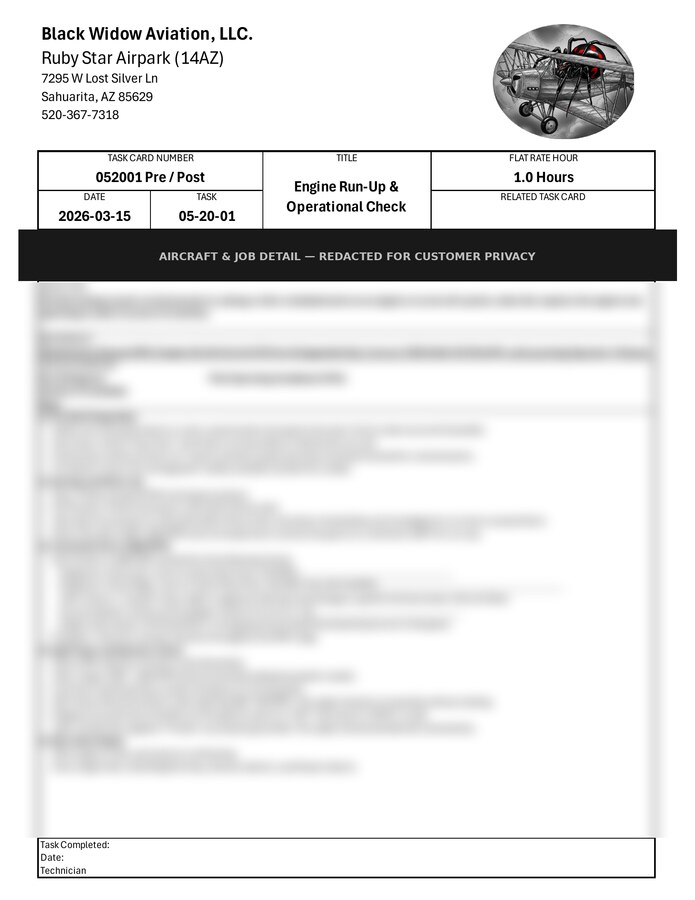
A real task card from our system. Aircraft and job detail redacted for customer privacy; procedure content blurred, since the specifics are what make it worth having.
See exactly what's included in inspection labor — and what isn't, like parts and discrepancy repairs — on our Inspection Pricing page before you schedule.
See pricing by aircraft →Michael holds an A&P certificate and is working toward his Inspection Authorization. Annual inspections and major sign-offs for established customers are handled through a partnering IA holder — ask us if that applies to you. A 100-hour inspection is the best place for new customers to start.